


Connolly Law Office is Veteran-Owned and operated
Connolly Law Office is Veteran-Owned and operated

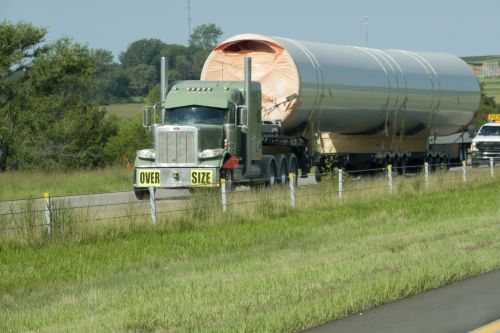
Every Illinois oversize/overweight permit incorporates by reference Form OPER 993 (the IDOT Special Vehicle Movement Permit Provisions). OPER 993 is not optional background material. Per its own terms, it “must be carried in the vehicle to which the permit applies,” and its conditions govern every permitted movement as if fully written into the face of the permit.
Among the most significant provisions in OPER 993 is the section titled “Permit Violations — A Clarification of 625 ILCS 5/15-301(h).” This section draws an important legal distinction that many roadside enforcement officers and even some prosecutors overlook: the difference between a violation of permit and a void permit.
OPER 993 identifies a list of errors or discrepancies that constitute a “violation of permit,” but do not render the entire permit null and void. When a violation of permit is found, OPER 993 provides the remedy: the permittee must either bring the load into compliance with the permit’s conditions or purchase a new permit before continuing the move. This is a compliance remedy, not an automatic finding of operating without a permit or a basis for an overweight prosecution.
This distinction matters significantly. If a discrepancy in the load description falls under an incorrect make, model number, or description, the permit is not void. The carrier was operating under a valid permit. Any overweight citation based solely on the theory that the description discrepancy invalidated the permit may be legally unsupported.
OPER 993 reserves true permit voidance for only three circumstances:
The practical consequence of this framework is significant. A carrier who presents an oversize/overweight permit with a load description that does not precisely match the actual load is not automatically operating without a valid permit. Unless the permit falls into one of the three void categories above, the permit remains legally operative. The carrier may face a “violation of permit” citation, but that is a different charge, with different elements and penalties, than an overweight offense based on operating without permit authority.
OPER 993 also defines when a vehicle is deemed to be operating without a valid permit altogether. This occurs when:
Notably absent from this list is a load description discrepancy. A carrier traveling on the correct route, within the permit’s validity dates, under a permit actually obtained from IDOT, is not operating “without a valid permit” merely because the return load differs from the outbound load description.
Before issuing an overweight citation based on an alleged permit defect, the three-part void analysis under OPER 993 should be applied. If the permit is not fraudulent, the load is not divisible, and axle spacings are not uncorrectable, the permit is not void.
An overweight charge based solely on permit invalidity may not be legally sustainable.
Under OPER 993, an incorrect load description does not void the permit. The carrier must either conform the load or obtain a new permit, but the original permit remains operative.
Everything else—including wrong plates, wrong models, or incorrect dimensions—is generally treated as a permit violation, not a void permit. Contact Connolly Law Office today for a consultation
This article is intended for general informational and educational purposes only. It does not constitute legal advice and does not create an attorney-client relationship. Illinois commercial vehicle permit law is complex and fact-specific. Carriers, drivers, and operators facing permit-related citations should consult a qualified Illinois transportation attorney.
Law Firm Website Design by The Modern Firm
© 2026 Connolly Law Office
| View Our Disclaimer | Privacy Policy